Mar 20 2012

Fruity Loops and Arrowheads

One of the features of any network is the appearance of motifs, patterns (sub-graphs) that recur within a network much more often than expected at random. These small circuits can be considered as simple building blocks from which the network is composed. This analogy is quite useful, since many of these motifs would appear to have their corollaries in electronic circuitry. Motifs appear to play an important role in transcription factor regulation, which is pretty significant, because transcription factors regulate the expression of most genes.

Electronic circuits spend a lot of their time filtering out noise, and many motifs in molecular biology do this same function. Most of this noise is stochastic: a charmingly ancient Greek word that more-or-less equates to random, but not exactly, being derived from the Greek stochastikos, ‘skillful in aiming.’ To me, stochastic embodies the old saw that ‘if something can happen, it will.’

Stochastic occurrences mess up our pretty, deterministic, view of how things happen. For example, the response of our bodies to radiation therapy is stochastic since not every cell receiving the radiation energy is at a point in its life cycle when the radiation therapy can effect it: Some cells are (those currently reproducing) whilst other cells are not (those currently at rest). This is a problem when one uses methods of measurement that are Gaussian (i.e they ‘average things out’) because these types of measurement will yield indications of a more gradated response than really occurred.

Stochastic music was pioneered by the composer Iannis Xenakis. Unfortunately, while undoubtedly making for interesting math, I agree with this author that the music sounds more or less like an hour-long extended visit to a junk yard. I do like some of Xenakis’ other music though, such as Metastaseis..

Stochastic versus graded response.

Most network motifs try to soften up the responsiveness of transcription factors to stimulus with a high signal to noise ratio, sort of like how an experienced parent can tell the difference between a crying child who just needs to nap versus a child in true distress.

Since developing the Quodlibet module in Datapunk I’ve been increasingly aware of the need to incorporate these types of motifs in my network calculations, when and where they show up. Quodlibet currently does quite a bit of graph/network/combinatorial calculation already (click on the Analytics link in any molecular map to see it at work) so looking for network motifs seemed the logical next step.

I mostly work in Perl, so I often take advantage of CPAN (The Comprehensive Perl Archive Network) which hosts a wealth of Perl modules, including a terrific collection of bioscience libraries, such as Bioperl. These modules are what makes Perl so great: you do not have to reinvent the wheel and in many instances you don’t even have to know exactly how the wheel works. Just plug it in, feed it good stuff and get the output. CPAN has been a great asset with Quodlibet, but contained no modules for network motif detection. Fortunately an online homework assignment provided me with the means to get started.

However, before I launch into any of that stuff, in my next blog I’ll take a look at the most common network motifs. These have been identified largely through the work of Uri Alon and his lab at the Weizmann Institute of Science in Israel, and if your interest runs in the direction of computational biology, I recommend that you take a look at his book Introduction to Systems Biology: Design Principles of Biologic Circuits (Chapman and Hall/CRC). The loop is a basic network motif, so next blog we’ll take take a look a a few variations to get an idea about how these things work things.

Like the digital circuitry in your computer, clusters of network motifs are capable of computational processes. Think about this: Humans share about 98% of their genome (at least the sequences) with apes. This of course begs the question ‘why are we not more similar?’ The answer is that while we share much of the base sequences, there are tremendous differences in the ‘computational knowledge’ that acts upon these sequences, in particular the networks involved in transcription factor regulation: operons, regulons and modulons. It is the ‘combinatoric wisdom’ that seems to differentiate between the classes of life forms.

No comments on this article yet

Mar 06 2012

MTOR Dependant and Independent Autophagy

Published by
Under Uncategorized


Peter D’Adamo: ‘MTOR Dependent and Independent Autophagy’ (02/10/12)

Peter D'Adamo presenting at the 3 West Club, New York City.

A lecture given at the 3 West Club, New York, NY.

No comments on this article yet

Feb 09 2012

Practical Glycomics

Peter D’Adamo, ‘Practical Glycomics’ (10/23/11)

Initial hour of six-hour, day-long seminar done for the UB Nutrition Institute, October, 2011.

Peter D’Adamo, Flying Spines (1981)

No comments on this article yet

Jan 03 2012

COE, 1/1/2012

Published by
Under Uncategorized

In 2009, Dr. Peter D’Adamo and the University of Bridgeport College of Naturopathic Medicine co-created the Center of Excellence in Generative Medicine. Beginning in 2012, the Center will research, develop and employ the tools of systems analysis, molecular biology and bioinformatics to better understand the unique and complex self-healing behaviors that are the basis of naturopathic philosophy and therapy. The COE will be based in a beautiful Victorian house adjacent to UB Health Sciences Complex.

Beautiful woodwork surrounds the proposed lecture area.

Screening off of hallway/ waiting area.


Stairway to second floor.

Sunlight highlights the carved wood.

No comments on this article yet

Dec 22 2011

Eat Me

Imagine that you are the owner of a small factory that makes replacement windows.

Normally, your ordering department does a pretty good job of things and the supply of the constituent parts necessary to make a decent replacement window (one assumes these to be things like glass, vinyl, aluminum, hardware, etc.) arrive punctually and in sufficient amounts to allow you to make the maximum number of windows with the minimum amount of wastage.

However, over time changes in personnel lead to problems of supply and demand. Tired, jaded people in the ordering department forget a decimal point and you wind up with an excess of window locks; poorly trained workers on the assembly line make a variety of newbie-type errors that result in windows that are unsellable. Over time this pile of unsellable windows begins to accumulate to the point where it begins to clog up the aisles, creating an unhealthy workplace. Soon the corporate bank account is drained due to excessive purchasing and the assembly area is choked with unusable, unsellable, windows. Workers begin to grumble about the unsafe working conditions and a few threaten to strike unless conditions improve. An investigation seems to indicate that your factory supervisor, Mr. Mtor, has a grudge against you due to his being passed up for a promotion at his last salary review and has been going around sabotaging things by telling the workers to not bother about quality control and cleaning up after themselves.

Concerned about the future of the family enterprise, you fire Mr. Mtor and hire a sharp graduate of Wharton School of Business and soon things begin to right themselves. A special work team is put together to go through the piles of unsellable windows, cannibalizing parts that can be reused to create properly constructed, sell-able windows. All new orders are now reviewed to insure that no duplication or excess inventory is allowed to siphon off precious capital and storage space. Soon conditions begin to improve, your workers seem much more happier, and productivity and profitability skyrocket.

Welcome to the wonderful world of cellular autophagy.


Autophagy (‘self-eating’) is a catabolic (breakdown) process used by cells to degrade and remove some of their internal components deemed to be unnecessary or undesirable. Like our window company, cells are little factories of a sort, and as such they function under many of the same dynamic considerations: Things accumulate; byproducts are produced that can’t do anything, etc.

In cells these byproducts are usually some sort of misshapen protein that folded in some manner incomprehensible to the cell and hence not usable. This is not all that uncommon and many common chronic diseases are characterized by the production of proteins that did not fold properly. Much like having a rock in your shoe, having mis-folded proteins in the synthetic/secretory parts of the cell factory (an organelle called the endoplasmic reticulum) results in what is known as the unfolded protein response, a stress reaction to these weird proteins.

Eat them up yum yum.


This phenomenon is called ‘ER Stress’ and can result in either of two outcomes.

Try to fix things or at least spit it out: The response to the misfolded proteins can trigger molecules called chaperones that can attempt to fix/refold the proteins into something usable. Lacking this response, the cell can attempt to encapsulate the offending stuff, digest it, and then spit the capsule out. This is autophagy.

Failing that, call it quits: If things are so bad, sometimes the cell just calls it a day and commits at type of cellular hari-kari suicide called apoptosis.

In addition to acting as a type of cell cleansing mechanism, autophagy is a very old survival tool. Like a factory deprived of raw materials because of a transit site, cells deprived of nutrients will scrounge around the workplace looking under tables and behind cabinets for surplus parts. In the cell’s case, when deprived of nutrients like the amino acids tyrosine and methionine, the cell will begin to breakdown parts of itself to keep going. Much of the time, this breakdown is a good thing, and perhaps explains why things like calorie restriction seem to increase lifespan: under those conditions the cell is munching away at itself, and since it is no fool, a lot of what it munches away at is junk best gotten rid of anyway.

Autophagy is normally kept under control by a protein called MTOR that acts as a sensor for conditions that might require autophagy. Normally MTOR blocks autophagy, so when it is inhibited, autophagy strikes up the band. MTOR can get screwed up in cancer, which is not a great thing since autophagy tends to block the apoptosis suicide mechanism (why kill yourself when things are working this great?) This has led some to posit that enhancing autophagy might not be a great thing. However it is probably not this simple as other genes that act as tumor suppressors appear to enhance autophagy by blocking MTOR, so we still don’t know the complete answer on that one.

Two things for sure: autophagy looks like a winning strategy when it comes to neurodegenerative disease and aging. Slower aging associated with decreased MTOR activity, while disease like Parkinsons and Alzheimers are linked to blockages in autophagy.

Some natural products, including epigallocatechin gallate (EGCG), caffeine, curcumin, and resveratrol, have also been reported to inhibit MTOR when applied to isolated cells in culture. More work is needed to see if these work at the level of dietary supplementation.

There are sugars,and then there are sugars.

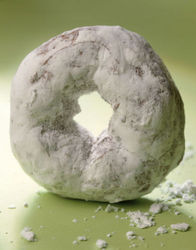
One interesting agent with well-recognized effects on autophagy is the natural disaccharide sugar trehalose, a sugar produced by bonding two glucose molecules together in a way that differs significantly from the sugar on top of a jelly donut. Trehalose is found in many organisms, including bacteria, yeast, fungi, insects, invertebrates, and plants. It functions to protect the integrity of the cell against various environmental stresses like heat, cold, desiccation, dehydration, and oxidation by preventing the screwing-up of the cell’s protein insides.

Extracting trehalose used to be a difficult and costly process, but recently an inexpensive extraction technology has allowed for its use in a broad spectrum of applications. Trehalose prevents cells from dehydrating, a phenomena that disrupts much of the cell’s insides in way that are not reparable. Trehalose-treated cells seem to resist this because the trehalose ‘splints’ their guts in place, so that when the cells get a chance to rehydrate they come back good-as-new. Dehydrated cells are common with aging, as the aging process tends to thin out the cell membrane, making it harder and harder for the cell to maintain its internal water balance.

Trehalose has been accepted as a novel food ingredient under the GRAS terms in the U.S. and the EU. Trehalose has also found commercial application as a food ingredient. It is available in dietary supplement form.

Maybe the most interesting property of trehalose is its ability to enhance autophagy. Neurofibrillary tangle (NFT) is a characteristic hallmark of Alzheimer’s disease. The accumulation of a protein called tau in the NFTs is one of the characteristic features of several diseases known as tauopathies. In cell culture studies trehalose treatment exhibited significantly decreased level of tau in all tau species.

What is especially interesting about trehalose is that it works in ways that are independent of the MTOR protein, leaving it free to do its work as a sensor of changing environmental conditions.

Turns out we didn’t have to fire Mr. Mtor after all.

The more technically inclined, with an up-to-date modern browser, may want to check out the autophagy network map in Quodlibet.


  1. Kim SI, Lee WK, Kang SS, Lee SY, Jeong MJ, Lee HJ, Kim SS, Johnson GV, Chun W. Suppression of autophagy and activation of glycogen synthase kinase 3beta facilitate the aggregate formation of tau. Korean J Physiol Pharmacol. 2011 Apr;15(2):107-14. Epub 2011 Apr 30. PUBMED
  2. Rodríguez-Navarro JA, Rodríguez L, Casarejos MJ, Solano RM, Gómez A, Perucho J, Cuervo AM, García de Yébenes J, Mena MA.Trehalose ameliorates dopaminergic and tau pathology in parkin deleted/tau overexpressing mice through autophagy activation. Neurobiol Dis. 2010 Sep;39(3):423-38. Epub 2010 May 28. PUBMED
  3. Sarkar S, Davies JE, Huang Z, Tunnacliffe A, Rubinsztein DC. Trehalose, a novel mTOR-independent autophagy enhancer, accelerates the clearance of mutant huntingtin and alpha-synuclein.J Biol Chem. 2007 Feb 23;282(8):5641-52. Epub 2006 Dec 20. PUBMED
  4. Krüger U, Wang Y, Kumar S, Mandelkow EM. Autophagic degradation of tau in primary neurons and its enhancement by trehalose. Neurobiol Aging. 2011 Dec 12. [Epub ahead of print] PUBMED

No comments on this article yet

Dec 21 2011

Concept Nodes

This entry is about an editing function in QUODLIBET. QUODLIBET is a computer program that creates, edits and queries biomedical networks. In addition to providing information about genetic-protein-phenotype interactions QUODLIBET also allows for additional information to be harvested, including data on the effects of natural products on gene-protein expression.  We are always looking for volunteers who are interested in helping out. Volunteers need not have any medical or super computer skills, just a passion for exactitude and a desire learn more about the genetics and biology.

Here is some documentation to get you going:

There is also a Forum for new users and potential editors.


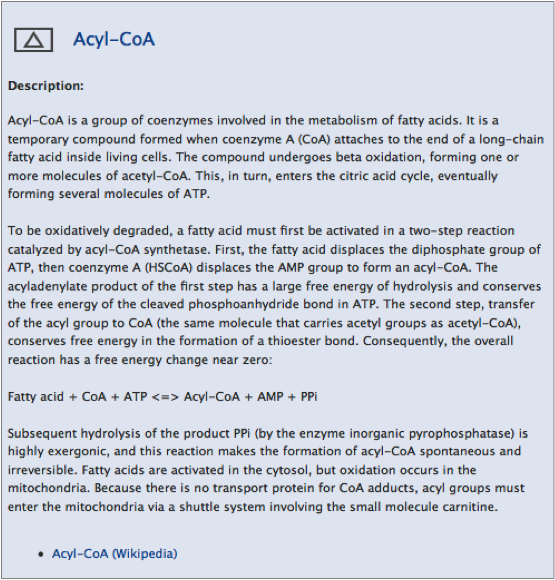
Most of the nodes in a QUODLIBET network might be called ‘working nodes.’ Working nodes are, to say the least, nodes that do some sort of work: they might carry information about a gene, a naturopathic agent associated with that gene or even contain other constituent genes. These types of nodes are also involved in the calculations that drive the network Analytics. But most QUODLIBET canvases are not made up solely from working nodes. For example, a pathway may terminate in a node that describes a process of some sort, such as ‘Increased insulin resistance’ or ‘Acyl-CoA.’ We might consider these Concept Type Nodes: Nodes that identify and teach about the context by which the network functions and has meaning.

Unlike basic working nodes, where you are free (or even impelled) to ‘roll your own,’ concept nodes are chosen and inserted from a toolkit of currently available items. This is done to maintain conformity and continuity: The concept node ‘Acyl-CoA’ will hyperlink to the same description popup in the map are editing as it will in any other map it appears in. Thus we only have to produce on very good entry on Acyl-CoA versus create one anew for every different map that needs one.

A concept node in a network.

Inserting a concept node into a map is easy: try adding one into the Sandbox map. From the pull-down, select one of the available concept nodes and press Submit. The Concept node will appear as a white box with a grey border. From there you can link concept nodes with edges just link any other node. Here we’ve inserted the concept node Acyl-CoA and linked it to the Vancouver node.

Now when a user clicks on the concept node Acyl-CoA they will be treated to the following information pop-up:

Concept node user information popup

No comments on this article yet

Dec 18 2011

Quodlibet

A quodlibet is a piece of music combining several different melodies, usually popular tunes, in counterpoint and often a light-hearted, humorous manner. The term is Latin, meaning “whatever” or literally, “what pleases.”


Quodlibet (QUOD) is a suite of network creation, editing and querying software I am currenty developing. QUOD is a software application that displays biochemical pathway data in a way that is interactive and information intensive.

In addition to providing information about genetic-protein interactions QUOD also allows for additional information to be harvested, including data on the effects of natural products on gene-protein expression.

A bit of the Adipocytikine network as displayed in QUOD. Amber nodes indicate high betweenness centrality and in-degree. Dark green tags indicate that a natural product has been associated with the regulation of that node.

Unlike most biochemical pathway/network depiction programs QUOD actually ‘thinks’ in a social network sense in that it analyzes the network and reports on many graph functions including betweeness centralities, page-ranks, and cluster coefficients. This allows an immediate understand of which nodes are acting in a critically important role in the network.

It was designed to be simple, easy to user and fun to edit and develop in. Because it is web-based, no special software is required, other than a modern browser and a decent Internet connection. QUOD runs under the DataPunk platform and is open-access. Curators can use the extensive editing tools to add to, alter, or create entirely new networks.

One of the more powerful aspects of QUOD is its ability to highlight naturopathic procedures and agents that have been shown to exert an influence on the expression or function of elements in a molecular network. This will have a major influence on the future practice of Generative Medicine, since complex patterns of relationships between naturopathic agents and procedures (traditional as well as biomedical) can be superimposed over the network analysis of complex molecular graphs so as to allow clinicians to derive extraordinarily high quality suggestions about specific approaches that may more closely approximate the holism of the Vis Medicatrix Naturae.

Since the project is community-based, we are always looking for volunteers who are interested in helping out. Volunteers need not have any medical or super computer skills, just a passion for exactitude and a desire learn more about the genetics and biology. To learn more about QUODLIBET, you can download the User Guide and visit the Community Forums.

What is needed now is the community of volunteers who would be willing to devote time to curate additional maps. Hopefully this call to action will not prove too disappointing: I can think of no better way to enhance one’s own understanding and knowledge about a complex topic than to build mind-maps. Thus it is to the students of our profession that I direct this challenge, though any interested party with a computer and a decent Internet connection is welcome to help out.

Phase I of our map development program will involve translating the KEGG genomic and metabolic maps into QUOD format. KEGG maps are good and even hyperlink to relevant KEGG entries for enzyme activities, drugs, etc. However KEGG maps are hand drawn and cannot perform network graph computations. However KEGG has done much of the heavy lifting: converting a KEGG map to a QUOD map makes development quick and painless. From there QUOD will link all subsequent maps into clustered networks, allowing for greater and greater information processing.

No comments on this article yet

Nov 12 2011

Beautiful Data

It has been said that if one really wants to learn something, they should teach it. However we may want to expand that aphorism, to perhaps if one really wants to learn something, they should teach it, organize it or animate it.

The commonality between science and art is in trying to see profoundly – to develop strategies of seeing and showing. –Edward Tufte

One of the main goals of our Datapunk bioinformatics platform is the development of new and exciting information visualization  (InfoViz) tools that can be used to develop new appreciations for the relationships between data.  We are currently developing two new InfoViz platofrms that I think have great potential. But more than that, these tools feature stunning interfaces that go a long way towards again proving the fact that information, presented imaginatively, can not only yield amazing secrets, but can be stunningly beautiful as well.

Pathscrubber

The first InfoViz platform we developed is a full-bodied genomic network depictor called PathScrubber, which runs inside Datapunk. PathScrubber draws network graphs of gene-protein relationships. Each node in the network is click-able and links to a popup that provides information on that gene, through an API to OMIM (Online Mendellian Inheritance in Man). Perhaps more significantly, Datapunk is the first informatics tool that is harvesting scientific references detailing phytochemicals and dietary agents that have been reported in the literature to influence the expression of these gene-proteins.

PathScrubber.

Simply enter any gene-protein terms you wish to include in your network. Don’t worry about partial terms; PathScrubber will return a list of possible terms for you to consider and you can check which ones are appropriate in the next screen. After the program draws the network, you can zoom in or out with either the mouse or via a slider. Nodes containing genomic expression information on phytochemical or dietary agents are coded orange. PathScrubber has an extensive help page. PathScrubber is programmed in Perl, utilizing Léon Brocard’s GraphViz module to draw the graphs.

InfoViz Democratizers

This platform is designed to provide a venue to allow naturopathic physicians and researchers to animate their own data. One of the most exciting/important things we are developing is a set of guidelines for authors on how to structure their data so as to allow us to easily port it into a stunning visual display. Most JavaScript data is encoded in a format called JSON, which although paradoxically designed to be easily readable by humans when compared to other data structures, requires a heavy degree of ‘nesting’ of the data, which most non-programmers would find confusing and thus increase their proneness to data entry error. So we developed a simple language that only requires that the data be entered in a simple text file with a few codes. This is then parsed by Perl into JSON and piped to the page as HTML. Here are two examples:

Lectins: Classification and Taxonomy
Our second infoviz tool is a depiction of a the taxonomy and classification of known animal, plant and microbial lectins. Lectins are protein molecules that attach to sugars and modulate a variety of cell functions, including mitosis, agglutination, metastasis and infections. Most of the data for this infoviz is from my textbook, Fundamentals of Generative Medicine Clicking on a node should move the tree and center that node. This infoviz makes extensive use of JavaScript, especially the JavaScript InfoVis Toolkit. The tree-like structure opens and closes as one click on the various categories.

Lectin Classifications

Radio buttons on the top allow for the user to display the tree in different aspects and to chose between a ‘normal’ display, where the categories open up in a linear fashion of a ‘centering’ mode where the newly selected category moves to the center of the tree. Finally branches of the tree often contain hyperlinks to additional information.

Actions of Medicinal Plants
Our third infoviz tool is a depiction of a paper developed by Eric Yarnell, ND entitled ‘A Compendium Pharmacological Actions of Medicinal Plants and Their Constituents.’ Clicking on a node should move the tree and center that node. This InfoViz also makes extensive use of JavaScript, especially the JavaScript InfoVis Toolkit to display day in the form of a morphing hypertree. The centered node’s children are displayed in a relations list in the right column. The data set for this InfoViz is still in development.

Compendium of Medicinal Herbs

There are 5 comments on this article so far

Nov 02 2011

Reductionism and Complexity

Published by
Under Complexity | Reductionism

The class I currently teach in generative medicine uses a content system called Blackboard. Blackboard allows me to upload material and pose questions to a forum-like discussion area. One of my students, upon reading the assignment in the textbook made the following comments:

You talk about the division between classical science and naturopathic science, which you equate, respectively, with reductionism and emergence (p. 30). Do they necessarily have to oppose one another and can they not coexist. And does not naturopathic medicine incorporate some degree of reductionism and classical science some degree of emergence?

I guess this goes back to the old question of: can’t we all just get along but, further, isn’t it sort of imperative that we not categorize conventional versus naturopathic medicine in such black and white terms? Or maybe it is a more useful distinction than I’m discerning?

If, indeed, scientific reductionism is dead (p. 20) and the biomedical community is unaware, how do you best suggest we, as NDs (or future NDs), start to make inroads into that community to convince them that the idea of emergence/holism/a generative approach is worth substantively incorporating into the larger paradigm of “modern” medicine?

I would argue that there is a global groundswell of desire among consumers of healthcare for this generative approach, but it might be up to us as practitioners of naturopathic medicine to bring it mainstream. But the path to that end is not clear. At the end of the day, not only do we have to all get along, but we need to understand what the other is saying.


If we define ‘dead’ as having lived a life with purpose, and perhaps even being so lucky as to exhaust that purpose, then reductionism is quite dead in the sense of being ‘not alive’. [Which leads to the question: if an idea has no purpose, hence no life, does it even get to die?]

The web of life is indeed a network.


There will always be a reason to think in reductionist terms when the facts do indeed fit the scenario. IMHO there will always be opportunities for non-complex thinking (and indeed one should seize them whenever one can).

My position is that, as a profession, we are perhaps running the risk of being overly seduced by the simplicity of fitting our oeuvre to the existing allopathic framework. In essence we will be moving into a neighborhood in which the prior occupants have already sucked out the life and are themselves moving on to new areas.

Moreover in doing so we may well be creating a nascent culture of new dogmatists, apparatchiks who insist on only dealing with issues on these terms. If that was not bad enough, this then runs the risk of creating its own response element, its own duality, such that a second subculture results that does the exact opposite, accepting facts a priori.

So, what about this generative medicine idea? As you so astutely point out, the goal is to blend both the complex-systems approach with the mechanistic-reductionist approach, point being that we, as naturopaths, should have a pretty good feel for where the work needs to be done and how to go about doing it. Perhaps this duality is itself a power law: we may be using an 80% reductionist formula to discern 20% of our total causalities. Certainly systems-complexity-network (SCN) medicine comprises only a small fraction of current biomedical information analysis. Generative Medicine, as I see it, should resolve that duality.

No matter what, the informational chasm does indeed lay which complexity, as well as any future potential for understanding and treating the life process itself.

Like they say, if you really want to learn something, teach it.

No comments on this article yet

Oct 29 2011

Carbohydrates: More than just calories

Carbohydrates comprise only about 1 percent of the human body; proteins comprise 15 percent, fatty substances 15 percent and inorganic substances 5 percent (the rest being water). Nevertheless, carbohydrates are important constituents of the human diet, accounting for a high percentage of the calories consumed. Thus some 40 percent of the calorie intake of Americans (and some 50 percent of that of Britons and Israelis) is in the form of carbohydrates: glucose, fructose, lactose (milk sugar, a disaccharide of glucose and galactose), sucrose, and starch.

Carbohydrates are the fuel of life, being the main source of energy for living organisms and the central pathway of energy storage and supply for most cells. They are the major products through which the energy of the sun is harnessed and converted into a form that can be utilized by living organisms. According to rough estimates, more than 100 billion tons of carbohydrates are formed each year on the earth from carbon dioxide and water by the process of photosynthesis. Polymers of glucose, such as the starches and the glycogens, are the mediums for the storage of energy in plants and animals respectively. Coal, peat, and petroleum were probably formed from carbohydrates by microbiological and chemical processes.

Carbohydrates are the fuel of life, being the main source of energy for living organisms and the central pathway of energy storage and supply for most cells.

Carbohydrates are the most abundant group of biological compounds on the earth, and the most abundant carbohydrate is cellulose, a polymer of glucose; it is the major structural material of plants. Another abundant carbohydrate is chitin, a polymer of N-acetylglucosamine; it is the major organic component of the exoskeleton of arthropods, such as insects, crabs, and lobsters, which make up the largest class of organisms, comprising some 900,000 species (more than are found in all other families and classes together). It has been estimated that millions of tons of chitin are formed yearly by a single species of crab. (1)

The name carbohydrate was originally assigned to compounds thought to be hydrates of carbon, that is, to consist of carbon, hydrogen, and oxygen. They are typical hexose monosaccharides, meaning that they have six carbon atoms. However, carbohydrates now include polyhydroxy aldehydes, ketones, alcohols, acids and amines, their simple derivatives and the products formed by the condensation of these different compounds through glycosidic linkages (essentially oxygen bridges) into oligomers (oligosaccharides) and polymers (polysaccharides).

The biological roles of carbohydrates are particularly important in the assembly of complex multicellular organs and organisms, which requires interactions between cells and the surrounding matrix. All cells and numerous macromolecules in nature carry an array of covalently attached sugars (monosaccharides) or sugar chains (oligosaccharides and polysaccharides), the latter that are generically referred to as “glycans.” (2)

Localization of glycoconjugates in the intracellular and extracellular compartments.

Because many carbohydrates are on the outer surface of cellular and secreted macromolecules, and are often freestanding entities, they are in a position to modulate or mediate a wide variety of events in cell–cell, cell–matrix, and cell–molecule interactions critical to the development and function of a complex multicellular organism. Much of the current interest in carbohydrates is focused on such substances as glycoproteins and glycolipids, complex carbohydrates in which sugars are linked respectively to proteins and lipids. They are termed glycoconjugates. They can also act as mediators in the interactions between different organisms (for example, between host and a parasite). In addition, simple, rapidly turning over, protein-bound glycans are abundant within the nucleus and cytoplasm, where they can serve as regulatory switches. A more complete paradigm of molecular biology must therefore include glycans, often in covalent combination with other macromolecules, (glycoconjugates) such as glycoproteins and glycolipids. (3) The term glycan may also be used to refer to the carbohydrate portion of a glycoconjugate, such as a glycoprotein, glycolipid, or a proteoglycan.

During the initial phase of the molecular biology revolution of the 1960s and 1970s, studies of glycans lagged far behind those of other major classes of molecules. This was in large part due to their inherent structural complexity and the great difficulty in determining their sequences. Also inhibiting interest was the fact that their biosynthesis could not be directly predicted from a DNA template. In addition, unlike genome products, glycans are highly dynamic and have extraordinarily complex biosynthetic pathways. The development of many new technologies for exploring the structures and functions of glycans has since opened a new frontier of molecular biology. The coming together of the traditional disciplines of carbohydrate chemistry and biochemistry with a modern understanding of the cell and molecular biology of glycans, and in particular, their conjugates with proteins and lipids, is called “glycobiology.” (4)

Analogous to genomics and proteomics, glycomics represents the systematic methodological elucidation of the “glycome” (the totality of glycan structures) of a given cell type or organism. The glycome, a subset of glycobiology, is immense and far more complex than the genome or proteome. In the past decade, over 30 genetic diseases have been identified that alter glycan synthesis and structure, and ultimately the function of nearly all organ systems. Many of the causal mutations affect key biosynthetic enzymes, but more recent discoveries point to defects in chaperones and Golgi-trafficking complexes that impair several glycosylation pathways. As more glycosylation disorders and patients with these disorders are identified, the functions of the glycome are starting to be revealed. (5,6)

  1. Sharon N. Carbohydrates Sci. Am. 245: (5) 90-116. 1980
  2. Varki A and Sharon N. Historical Background and Overview: Varki A, Cummings R, Esko J, Freeze H, Stanley P, Bertozzi C, Hart G, and Etzler M. Essentials of Glycobiology, 2nd edition, Cold Spring Harbor (NY): Cold Spring Harbor Laboratory Press; 2009.
  3. Ibid.
  4. Rademacher TW, Parekh RB, Dwek RA. Glycobiology. Annu Rev Biochem. 1988;57:785-838
  5. Freeze HH. Genetic defects in the human glycome. Nat Rev Genet. 2006 Jul; 7(7):537-51.
  6. Taylor ME and Drickamer. Introduction to Glycobiology. Oxford University Press 2nd Edition 2006

No comments on this article yet

Older Entries »